Striving to Surpass the Competition
A diagnostics company was developing a new digital tool to support specimen collection and testing workflows.
A key competitor had already launched a similar product and was gaining market share. The client needed to deliver a solution that matched or exceeded this offering, while ensuring strong adoption and measurable improvements in outcomes.
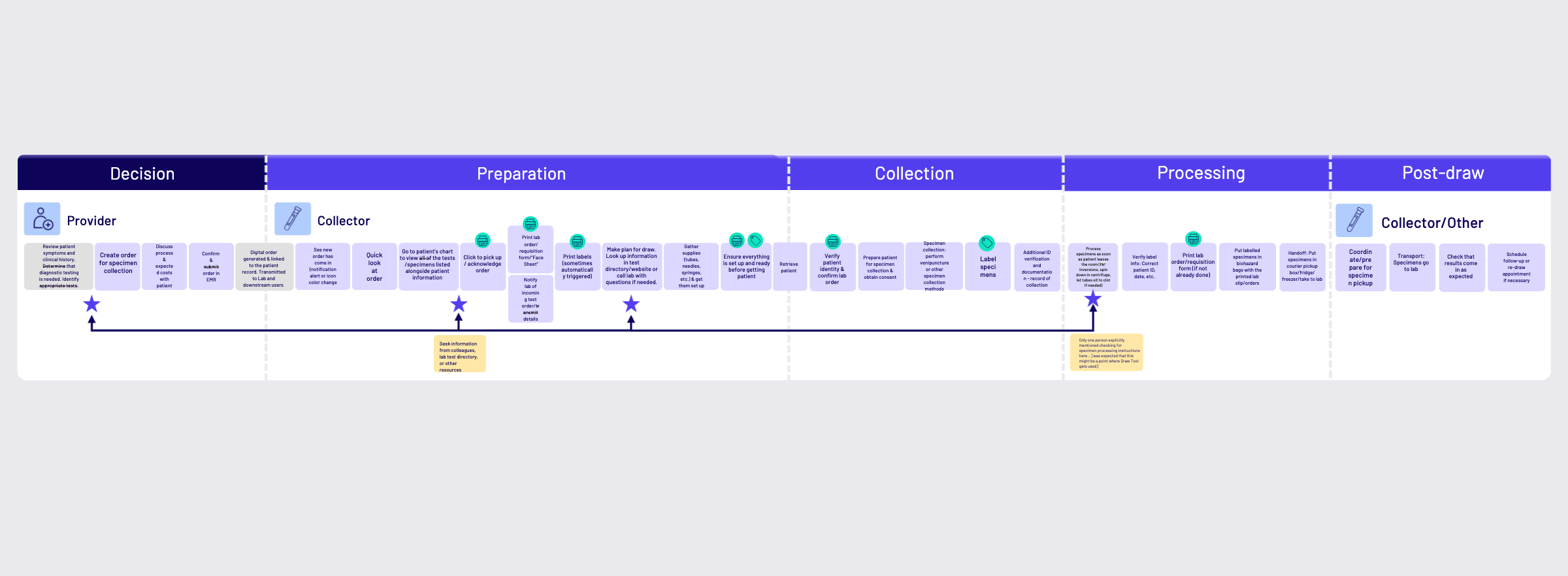
Finding Precise Moments to Fit in the Flow
Clinical workflows are complex and vary across roles, environments, and systems.
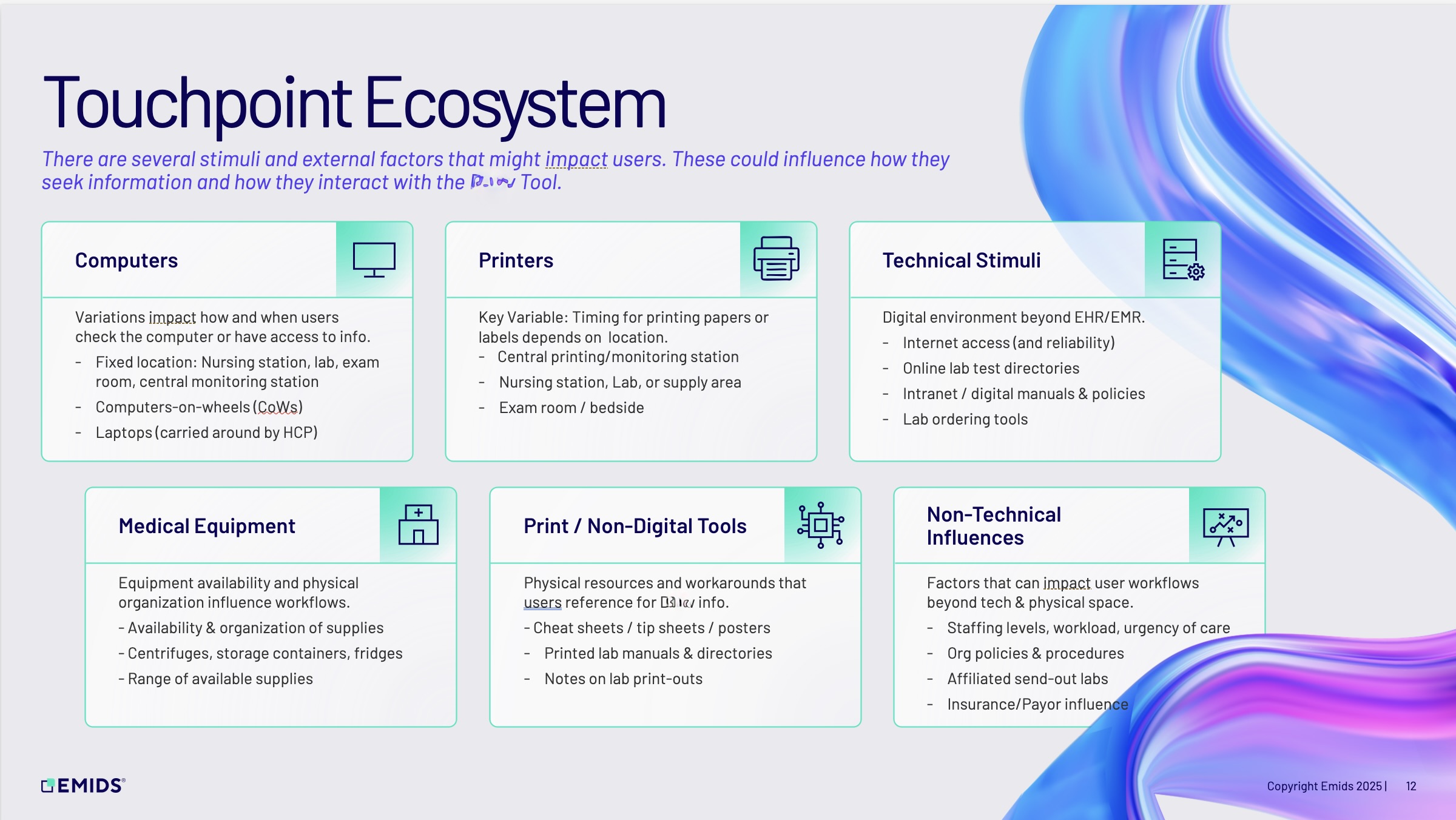
The team needed to understand how the tool would fit into real-world settings, including differences in EHR systems, physical environments, and user experience levels. Early decisions would determine whether the product would be adopted or ignored.
Using a Prototype to Collect Tangible Insights
I led the core research effort, focusing on understanding real workflows and testing the prototype in context.
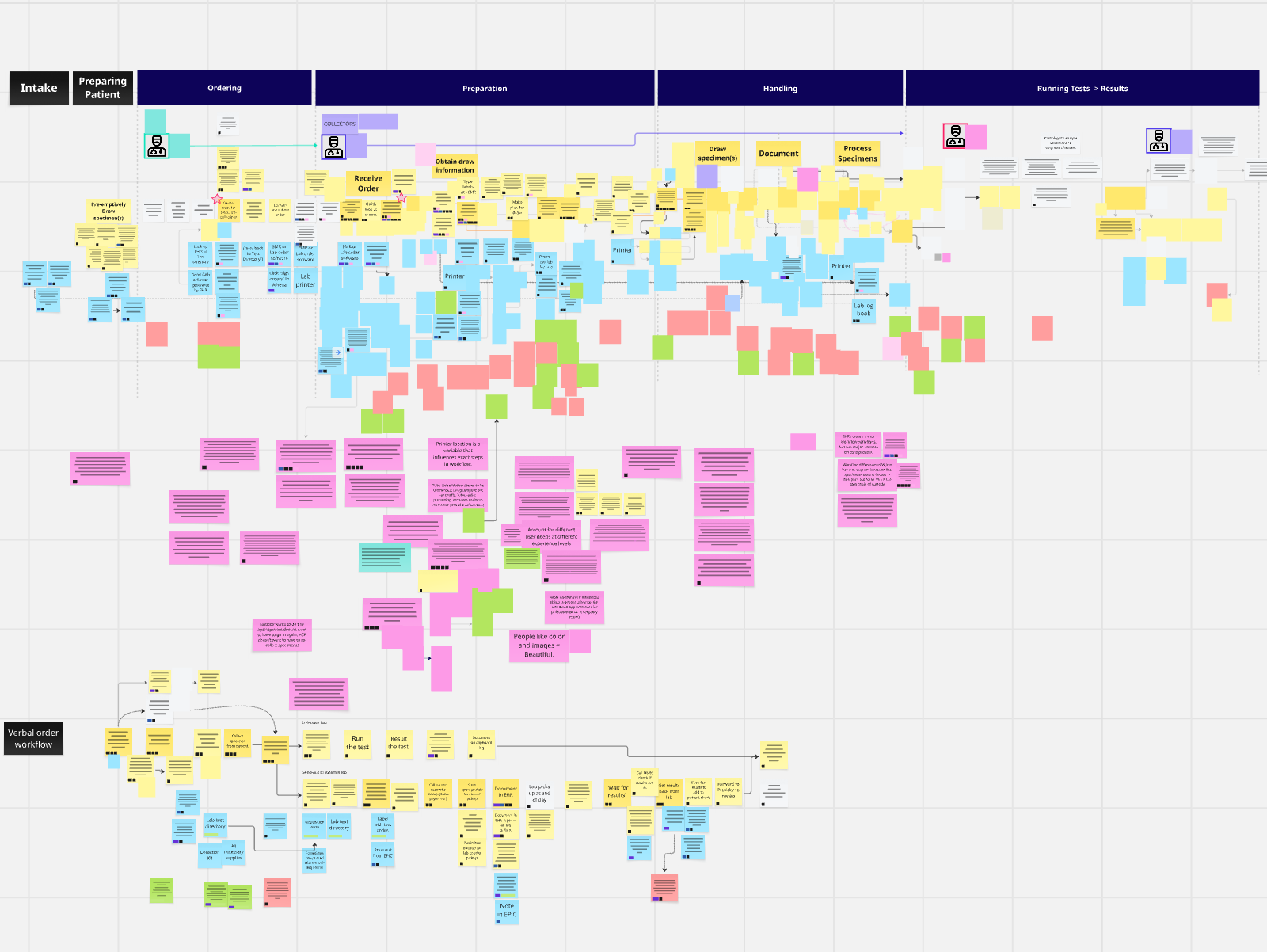
- Conducted stakeholder interviews and a journey mapping workshop to refine research scope.
- Developed research materials and coordinated participant recruitment.
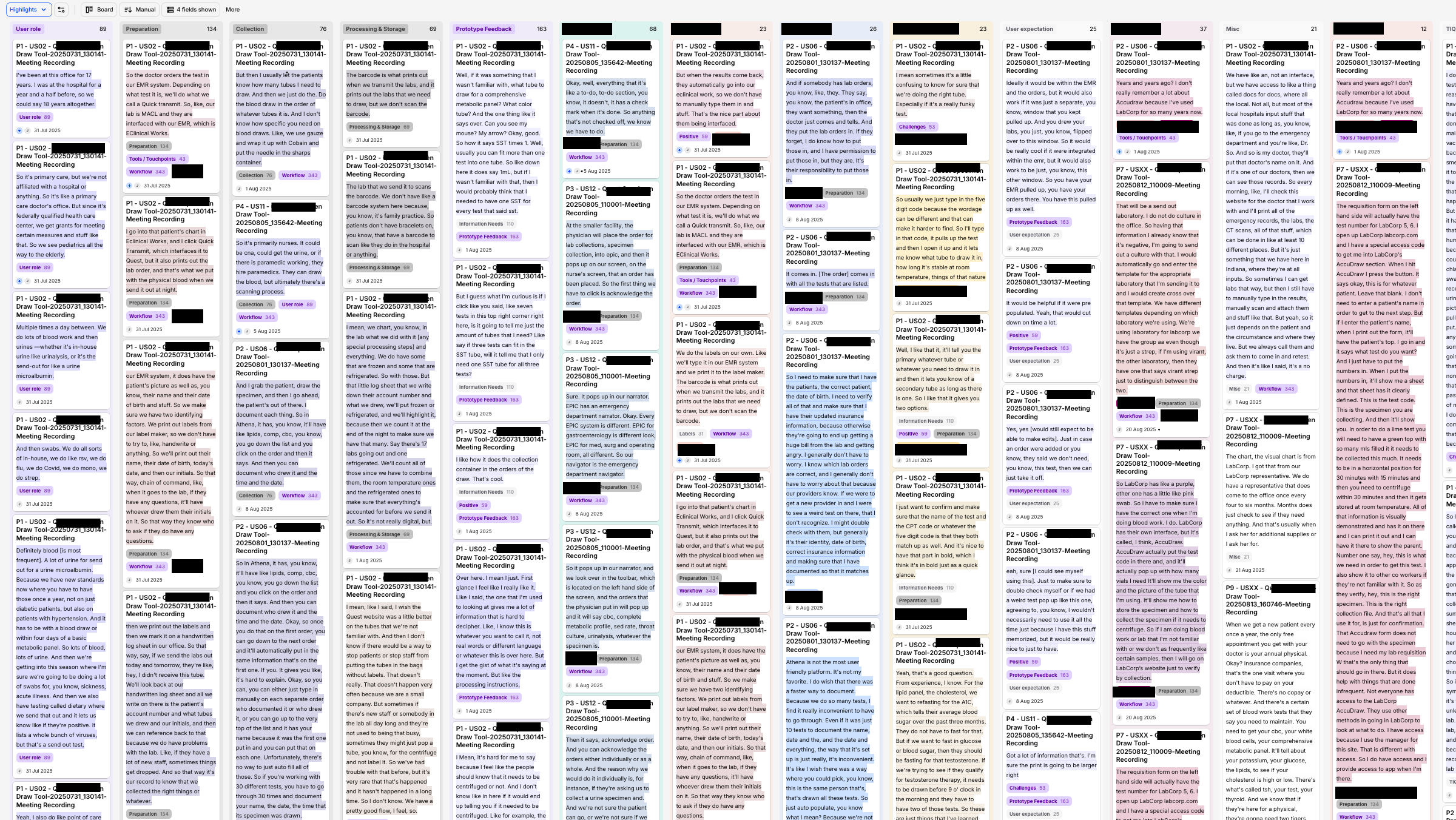
- Ran 12 in-depth interviews with healthcare providers using the prototype as a stimulus.
- Captured variation across roles, environments, and system configurations.
- Synthesized findings into clear patterns and opportunity areas.
- Presented results and recommendations directly to client stakeholders.
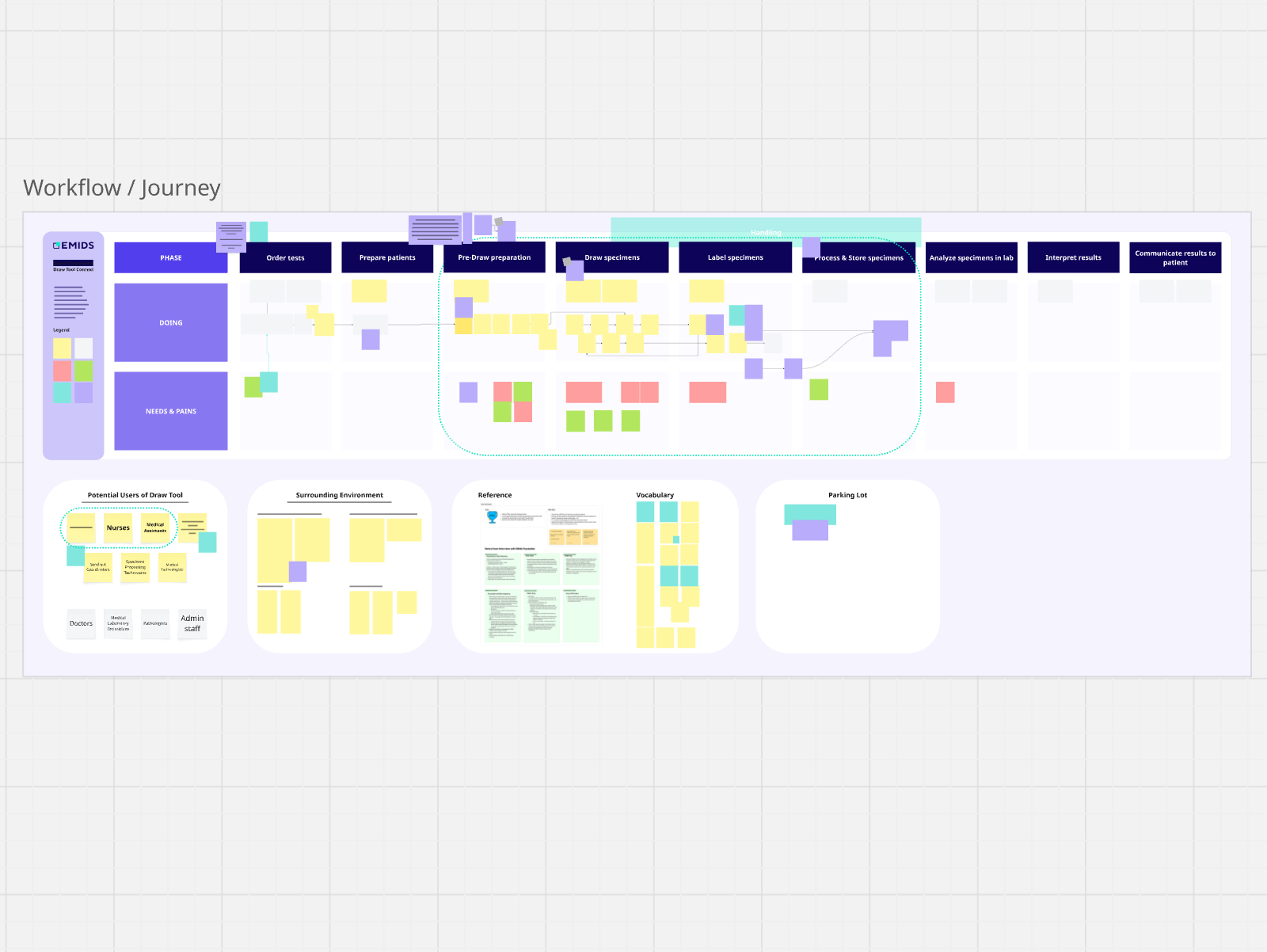
Seamless Integration was Key to Success
- Core workflows were consistent, but minor variation across EHR/EMR systems would make a notable difference in clinician experience.
- The tool delivered the most value for less experienced staff, where errors were more likely.
- Key opportunities existed for automation and integration to reduce manual effort.
- Improvements to information hierarchy would make the tool easier to use in fast-paced settings.
Illuminated the Details for Successful Integration
- Supported the decision to move forward with product development.
- Refined the prototype to better align with real clinical workflows.
- Informed integration strategy across different system environments.
- Identified opportunities to reduce errors in specimen collection and handling.
- Increased confidence that the product would drive adoption and improve outcomes.
Drove Product Research and Stakeholder Collaboration
I led the research end-to-end, from planning through to synthesis and delivery.
I managed recruitment, conducted all user interviews, and translated complex findings into clear direction for the product team. I also served as the primary voice presenting results, helping stakeholders understand how the tool would perform in real-world use.