
Responding to Emerging Client Needs for Healthcare Technology + AI
Our company was repositioning itself as a leader in AI healthcare solutions and seeing increasing demand for the design of novel AI-powered features.
The sales team was struggling to articulate the value of UX in AI-focused engagements. While the UX team had strong relevant capabilities, we needed to support this organizational shift by clarifying how our skillsets were relevant for AI projects. One aspect of this transition was creating proprietary, domain-specific offerings to position ourselves as experts in the market.
Clients Need Rapid Evaluations of New Features, but Standard UX Evaluations Lack Nuance for AI in Healthcare
AI introduces new usability risks that are not covered by standard evaluation methods, and Healthcare settings present unique challenges.
The team needed a robust, credible way to assess AI-powered experiences in a healthcare setting. The solution had to be grounded in research, easy to apply, and clear enough to support client conversations.
Synthesising Research Insights from Multiple Domains
I led the creation of a new evaluation method, combining research and best practices from relevant contexts, our team's expert input, and iterative refinement.
- Defined a project plan and scope for a new AI-focused research offering.
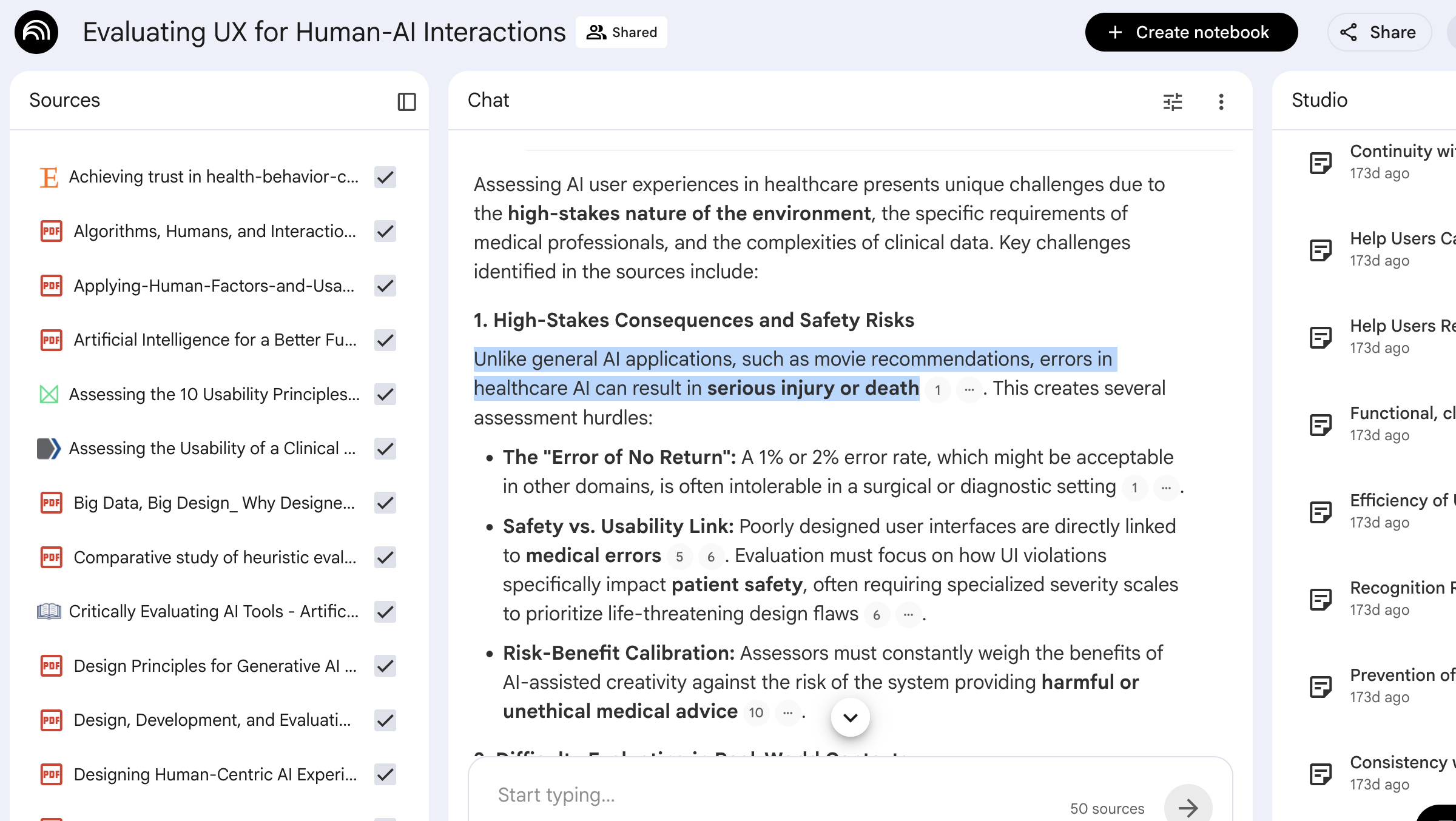
- Compiled and reviewed academic and industry research on AI usability and healthcare applications.
- Coordinated a team of researchers to review and synthesize key sources.
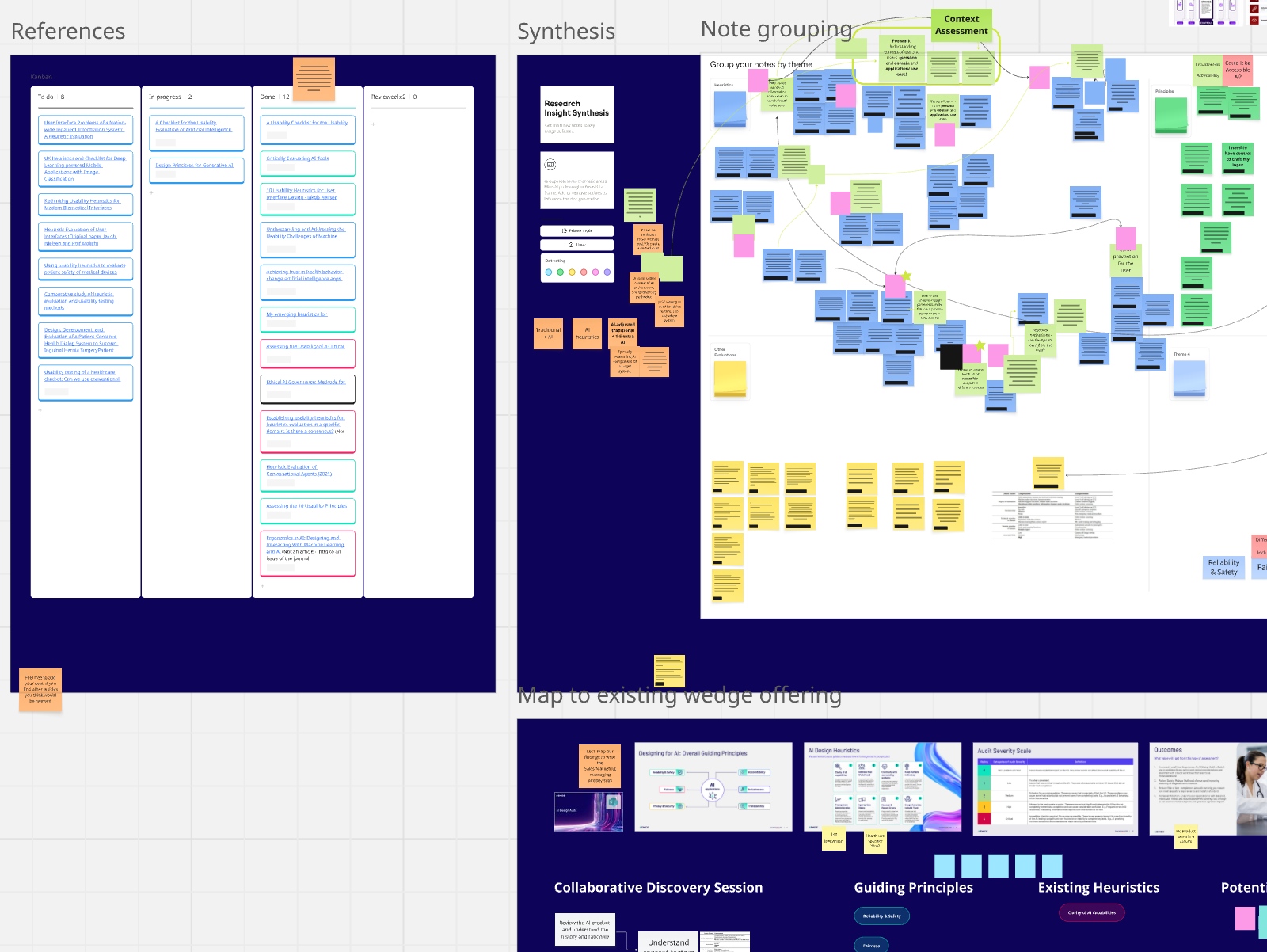
- Facilitated working sessions to identify themes and draft initial heuristics.
- Conducted deeper synthesis to refine and structure the framework.
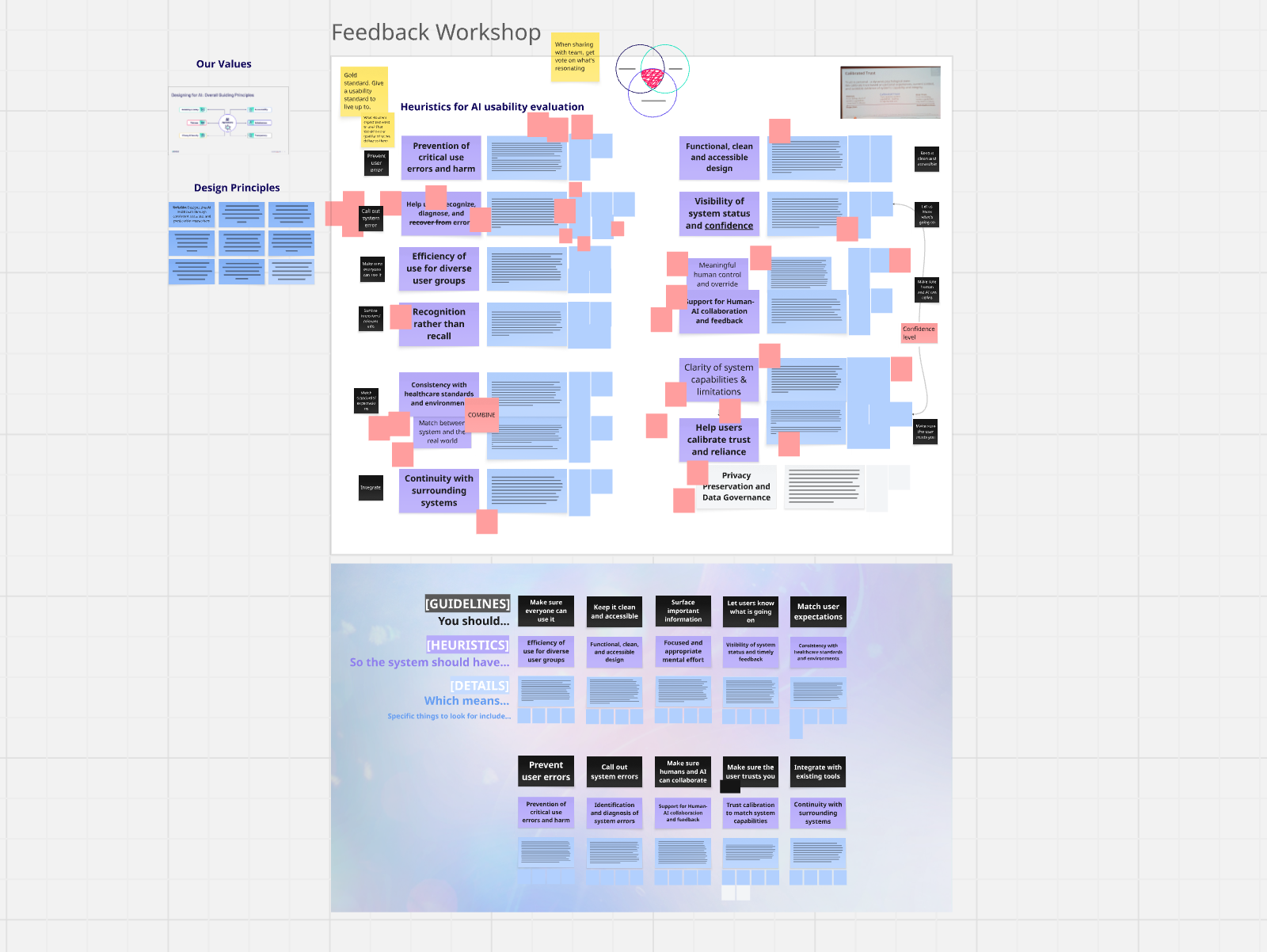
- Led critique sessions to reduce and prioritize the most valuable criteria.
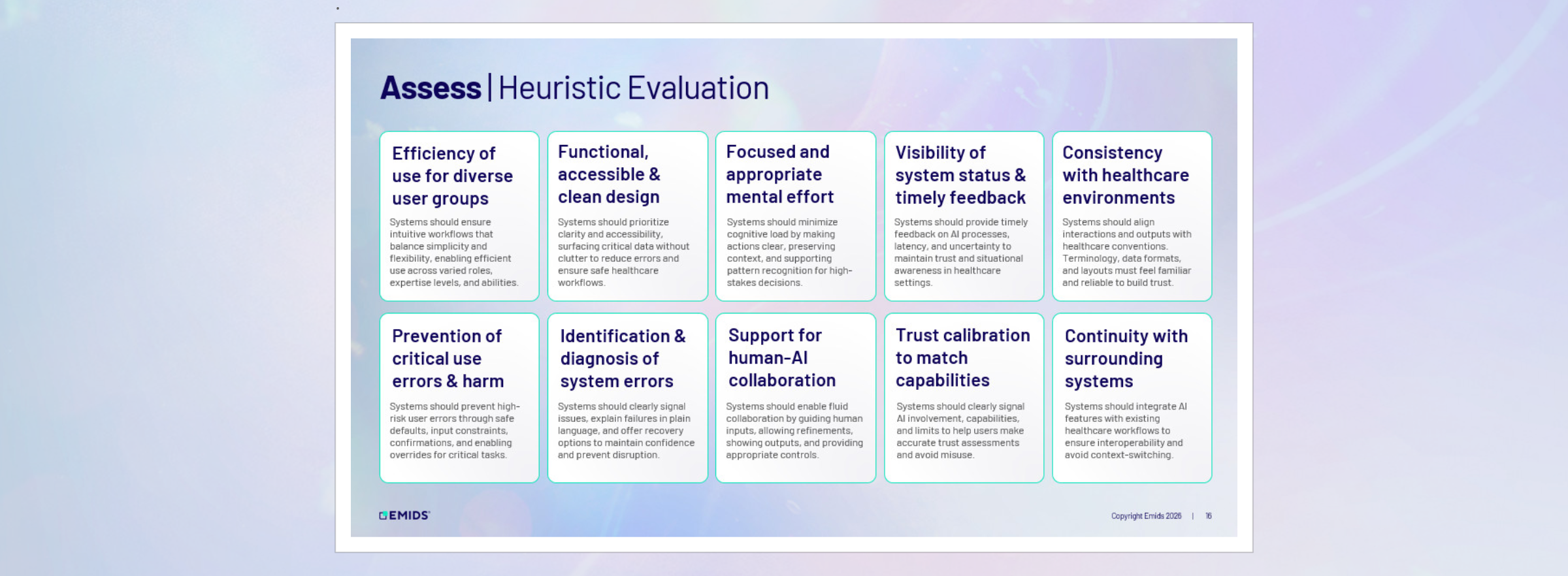
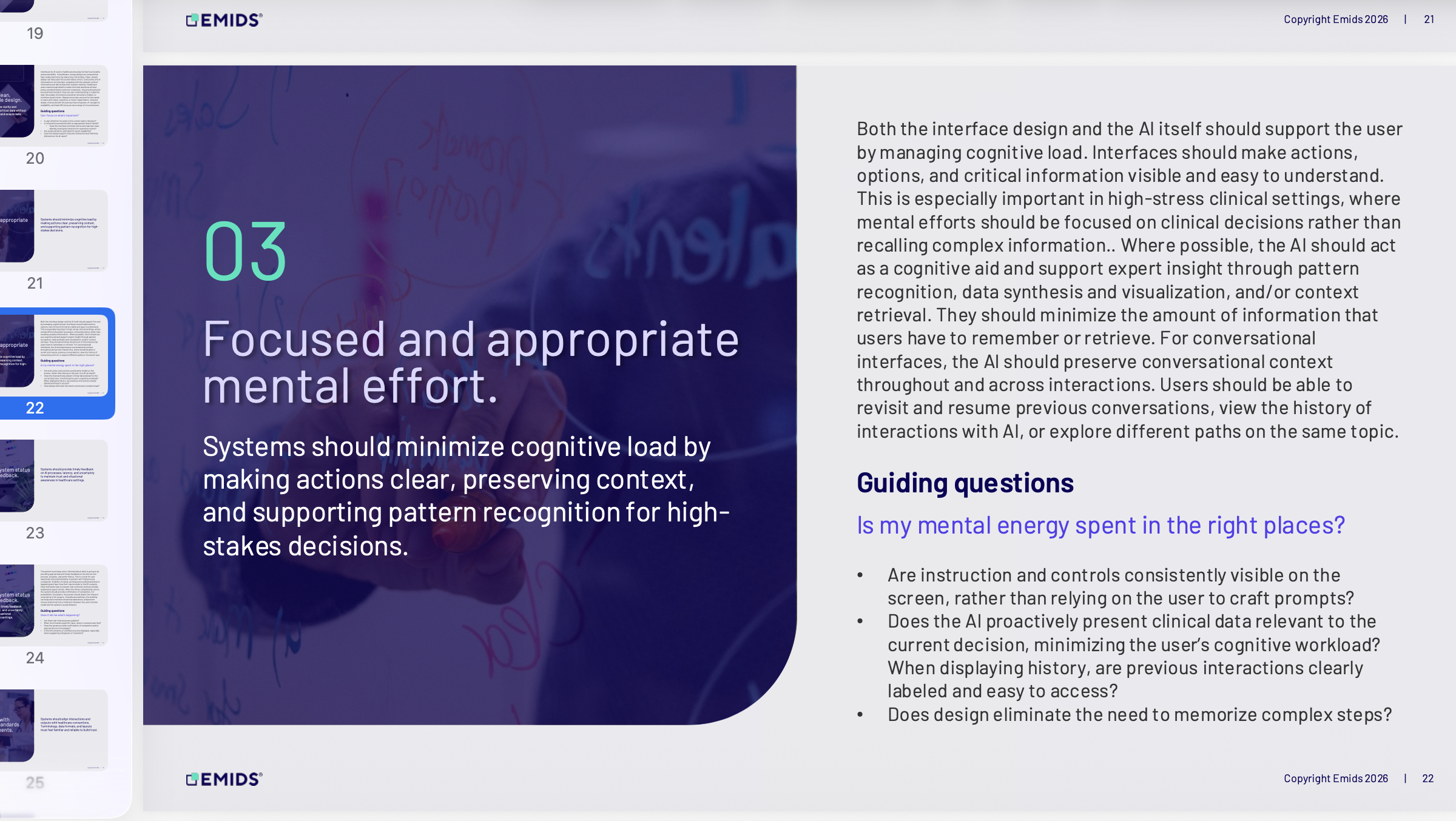
- Developed a final set of heuristics, design principles, and evaluation tools.
- Provided training and support to ensure team-wide adoption of the evaluation method.
What We Learned Through the Process
- Existing usability methods do not fully address the challenges of AI systems in healthcare.
- Trust, transparency, and user control are critical in healthcare AI experiences.
- Clear evaluation criteria are needed to assess system behaviour, not just interfaces.
- Teams need practical tools that can be applied quickly in real projects.
New Service Offering with Purpose-Built Framework
- Created a new AI Design Audit offering for internal use and enterprise clients.
- Enabled sales teams to position UX more effectively in AI proposals.
- Provided a structured method for evaluating AI-powered products.
- Supported internal teams working on AI initiatives.
- Established a foundation for future research and refinement.
Collaborative Leadership to Create Value from Team Expertise
I led this initiative from concept to delivery.
I defined the approach, guided the team through research and synthesis, and made final decisions on the structure of the framework. I also translated the work into practical outputs, including a sales deck, training program, and reusable tools.